
Chapter 12 · May 1945
Utrecht
May 1945
Nine wallets stamped for a war in the Pacific. Three mornings over Utrecht instead, at four hundred feet, with flour in the bomb bay.
A synthetic reading of this chapter is in the bar at the top. It will keep playing while you move through the book. The text below is the transcript. The voice’s place on the page is marked as it reads.
These mornings also sit on the mission board.
12.1
Sometime in the last weeks of the war in Europe, a carton arrived at Horham from the Martinez Kiwanis Club.
Inside were nine wallets — good leather, the kind that had not been available on the retail market in America since 1942, each one stamped along the inside edge with SPIRIT OF MARTINEZ and, beneath it, a crew member’s own name. The club had ordered them that spring, thinking of the Pacific. With Germany’s collapse plainly imminent by April 1945, the assumption at home, reasonable enough at the time, was that the war these nine men had been fighting would simply relocate to the other side of the world, and that whatever the town could still send them was likely to matter for a while yet.
See the platePlate 84See the platePlate 85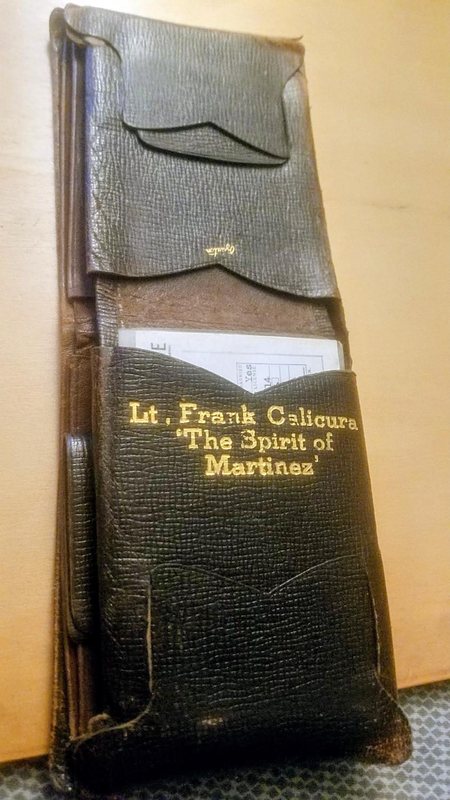
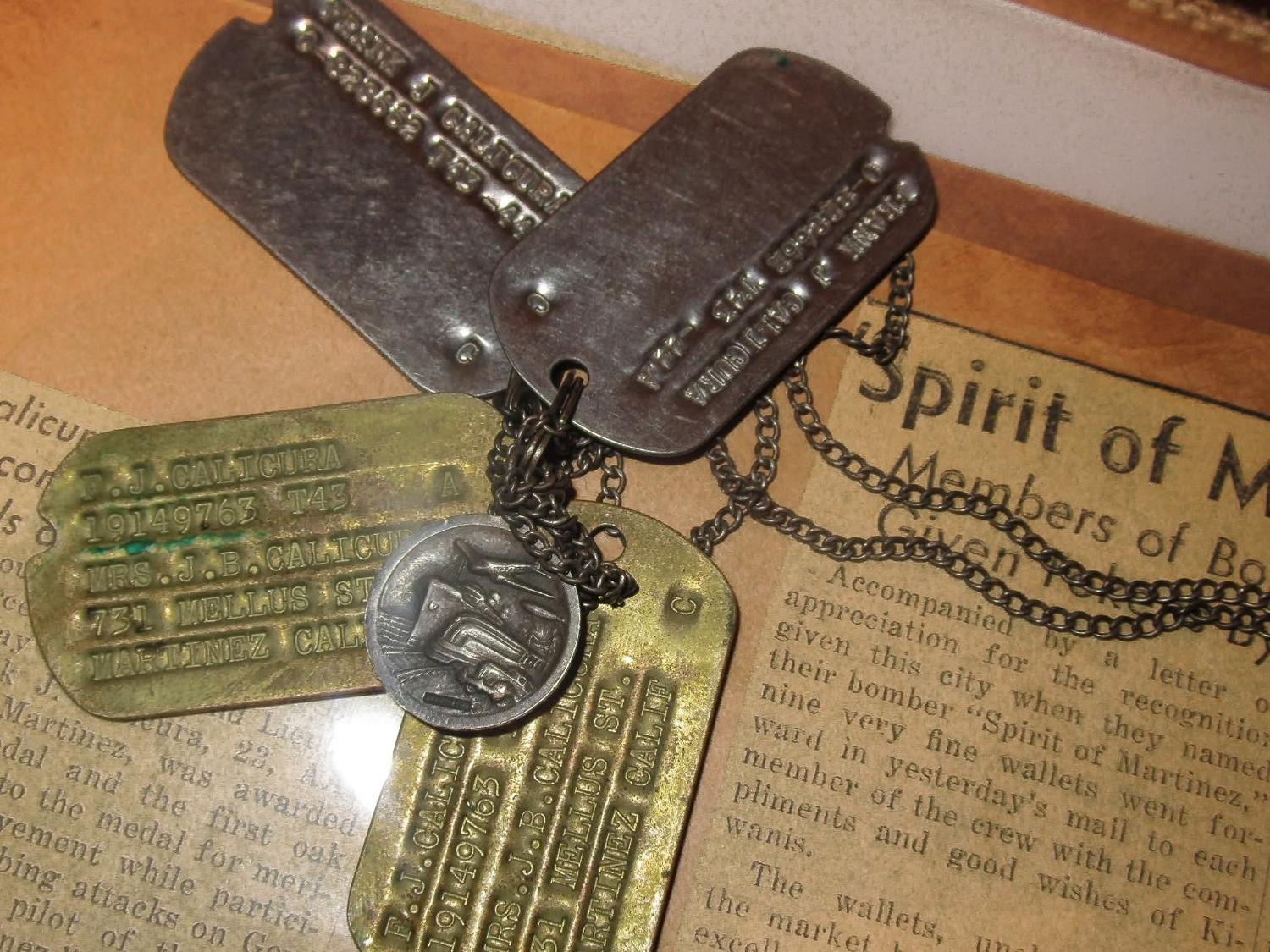

Frank Calicura moved his cards into his that week — license, discharge papers to come, Joyce’s photograph, a stiff little card from a Soho club that could not be resold. He put the old wallet, worn soft against his thigh through twenty-eight missions, into the footlocker. The tags that went with him still give the enlisted serial, 19149763, and Joyce as Mrs. J. B. Calicura at 731 Mellus Street. They sit on the same clipping.
Nobody in Martinez knew yet what these nine men were actually about to do instead.
12.2
By the spring of 1945, the western Netherlands was starving.
The crisis had begun the previous September, when the Dutch government-in-exile called a national railway strike to support the Allied advance during Operation Market Garden. The German occupying authorities retaliated by cutting food and fuel shipments to the country’s western provinces — Amsterdam, Rotterdam, The Hague, Utrecht — precisely the densely populated cities that depended on those shipments to survive. An unusually severe winter arrived on top of the embargo, and flooded agricultural land, deliberately inundated by the retreating German army, took much of the region’s remaining food production out of use entirely.
By the winter of 1944–45, daily rations in the affected cities had fallen to somewhere between four hundred and five hundred calories — bread stretched with sugar beet pulp, soup made from boiled tulip bulbs, whatever could be found. A survivor named John Papenhuyzen, whose account is preserved by an oral history project dedicated to this operation, described the bread of that winter as bread in name only: made from beans, or from the syrup boiled down from sugar beets, spread thin because there was nothing to spread it thick with. Audrey Hepburn, a teenager in Arnhem that winter and among those later fed by the operation this chapter describes, remembered going as long as three days without food and living for months on “hot water and one slice of bread, made from brown beans.” An estimated three million Dutch civilians were living under these conditions. By the time the crisis ended, somewhere between eighteen and twenty-two thousand of them had died of it — the exact figure is still debated, but the order of magnitude is not.
12.3
No one in a position to authorize a rescue actually had the authority to negotiate one directly.
Prince Bernhard of the Netherlands appealed to the Allied command on his country’s behalf. General Eisenhower, sympathetic, did not have standing to negotiate a ceasefire with an enemy that had not surrendered. The solution came through Air Commodore Andrew Geddes, who met with German officers under General Johannes Blaskowitz and secured an informal understanding: Allied aircraft would fly low, unarmed corridors over designated drop zones, and German anti-aircraft crews — still very much in a position to shoot them down — would hold their fire. Nothing about the arrangement was formalized in the way a proper armistice would have been. It rested entirely on both sides keeping a word given under conditions where either could easily have broken it.
The Royal Air Force began first, on April 29, in an operation it called Manna. The Americans followed on May 1 with Operation Chowhound, delayed at the very start by fog closing the English airfields. Together, before the war in Europe ended a week later, the two air forces flew something on the order of 5,500 sorties and delivered close to 10,000 tons of food. The Americans alone, in Chowhound, flew roughly 2,268 sorties and dropped approximately 4,000 tons — at an altitude of about four hundred feet and a speed of 150 to 175 knots, a combination that would have been suicidal in a contested airspace and was, over Holland that week, deliberately routine. Three American aircraft were lost during the operation: two in a mid-air collision, one to engine fire. None to enemy action. The Germans, for the most part, kept their word.
Independent confirmation of the operation's scale survives outside the family's own collection as well. A wire photograph captioned "Manna from Heaven for the Dutch," showing a 385th Bomb Group Fortress — a different group from Frank's own, over a different Dutch city — running the same kind of low pass, reported that on each of the first three days of May, something on the order of four hundred B-17s a day dropped eight hundred tons of food toward drop zones the Dutch had marked and the airmen had pinpointed. It is not a family document. It ran in the general press, credited to the Army Air Force's own photographers, and it says nothing about Utrecht, the 95th, or any of the three mornings Frank Calicura's crew flew. What it confirms is only the scale and the choreography — hundreds of heavy bombers a day, flying low and slow over marked ground, at the precision the operation required — reported nationally while the missions themselves were still underway.
12.4
Frank Calicura’s crew flew three of these missions: May 3, May 5, and May 6. All three were drops over Utrecht, at a place called Lage Weide.
See the platePlate 86See the platePlate 87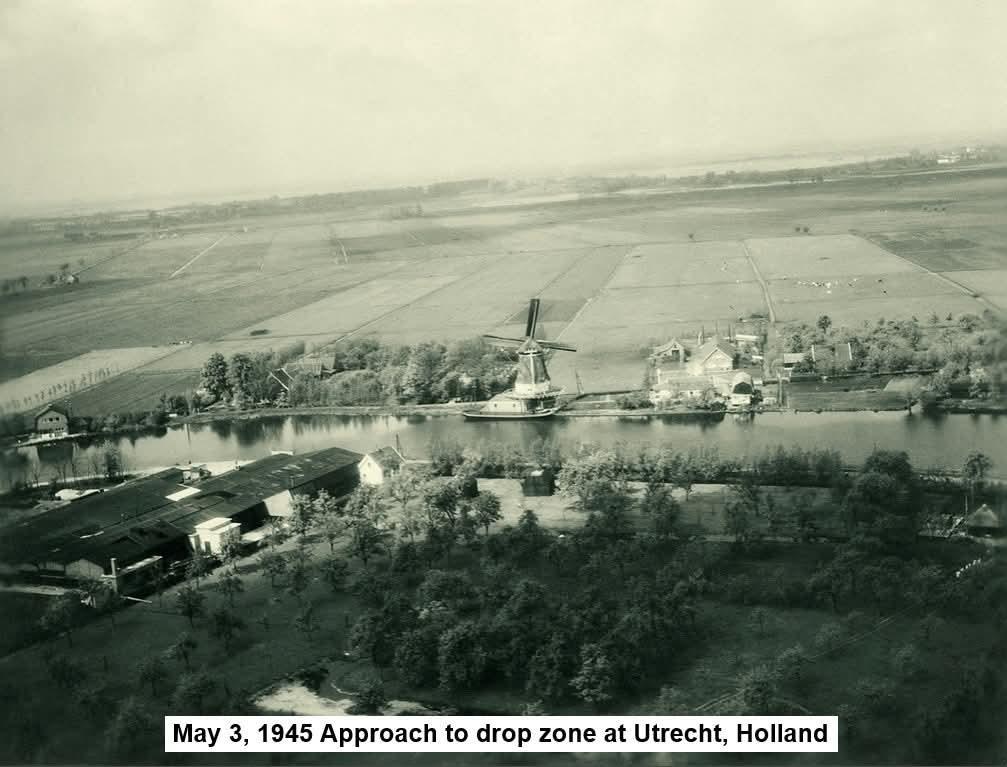
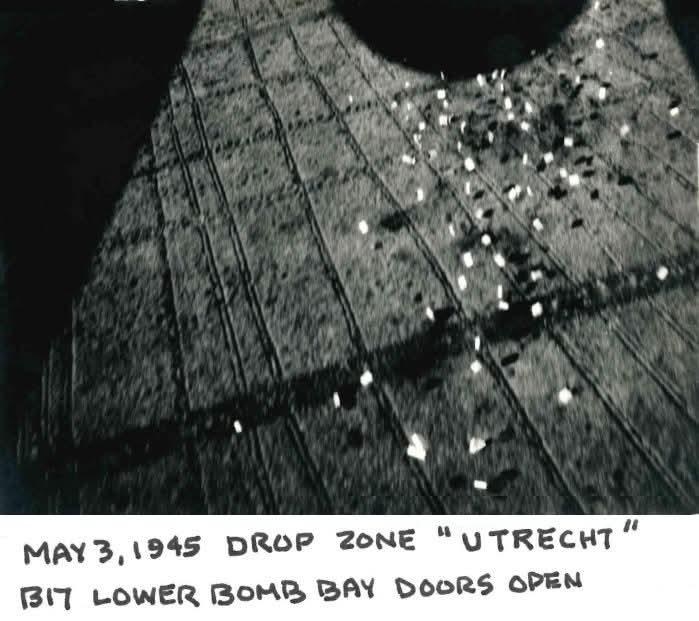

Nothing about the flying resembled what they had spent the previous three months doing. There was no formation to hold at altitude, no flak to climb through, no fighters to watch for. The bomb bay, built to carry explosives, carried food instead — flour, tinned meat, chocolate, powdered milk, packed and released at a height low enough that the crew could see, clearly, the people the cargo was landing among. Dutch civilians had learned within days to mark the fields with sheets, and to stand in the open where the aircraft could see them, in a way no one stands in the open during a war unless they have decided the war has, for this airplane, stopped applying to them.
See the platePlate 88See the platePlate 89See the platePlate 90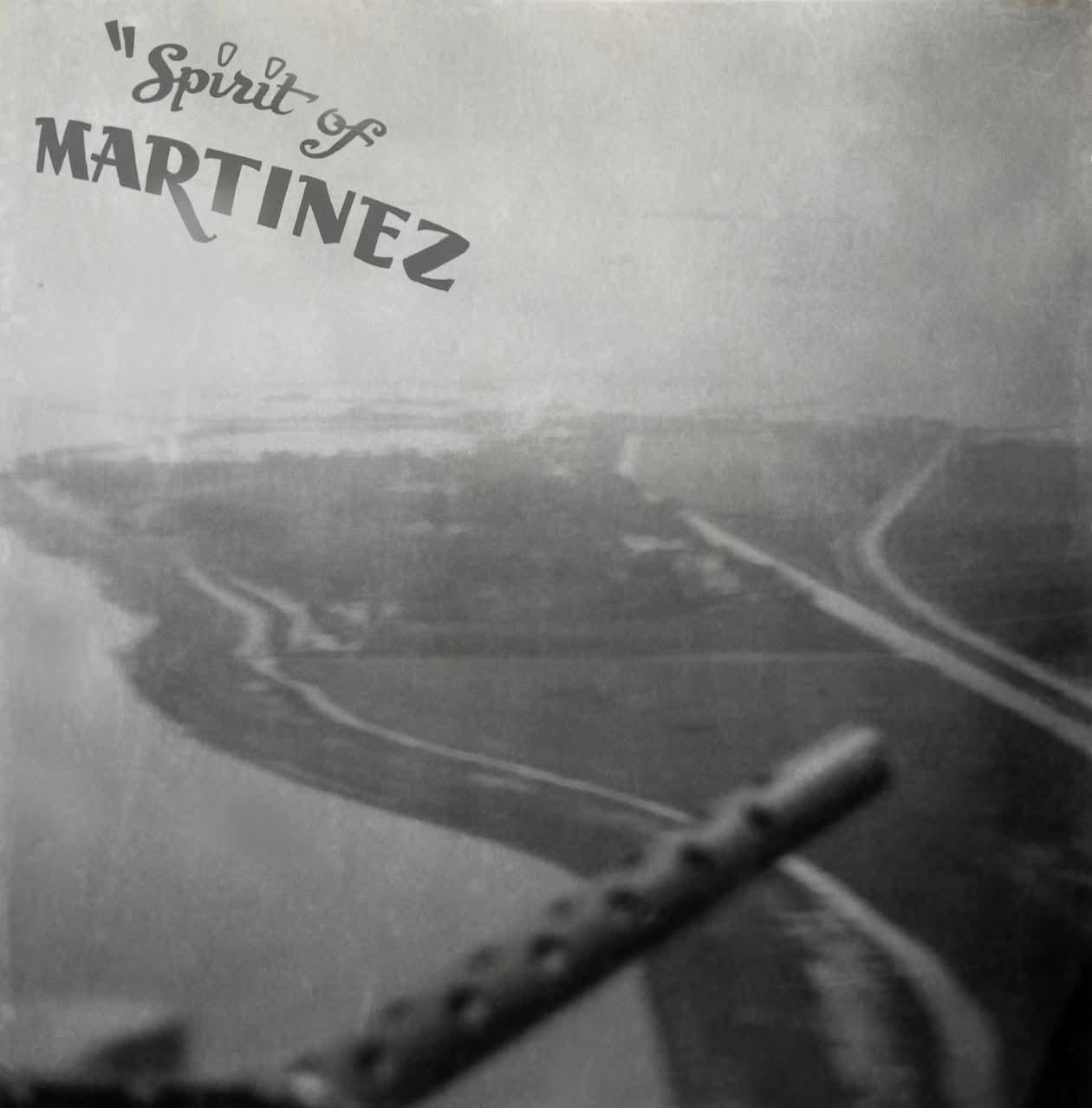
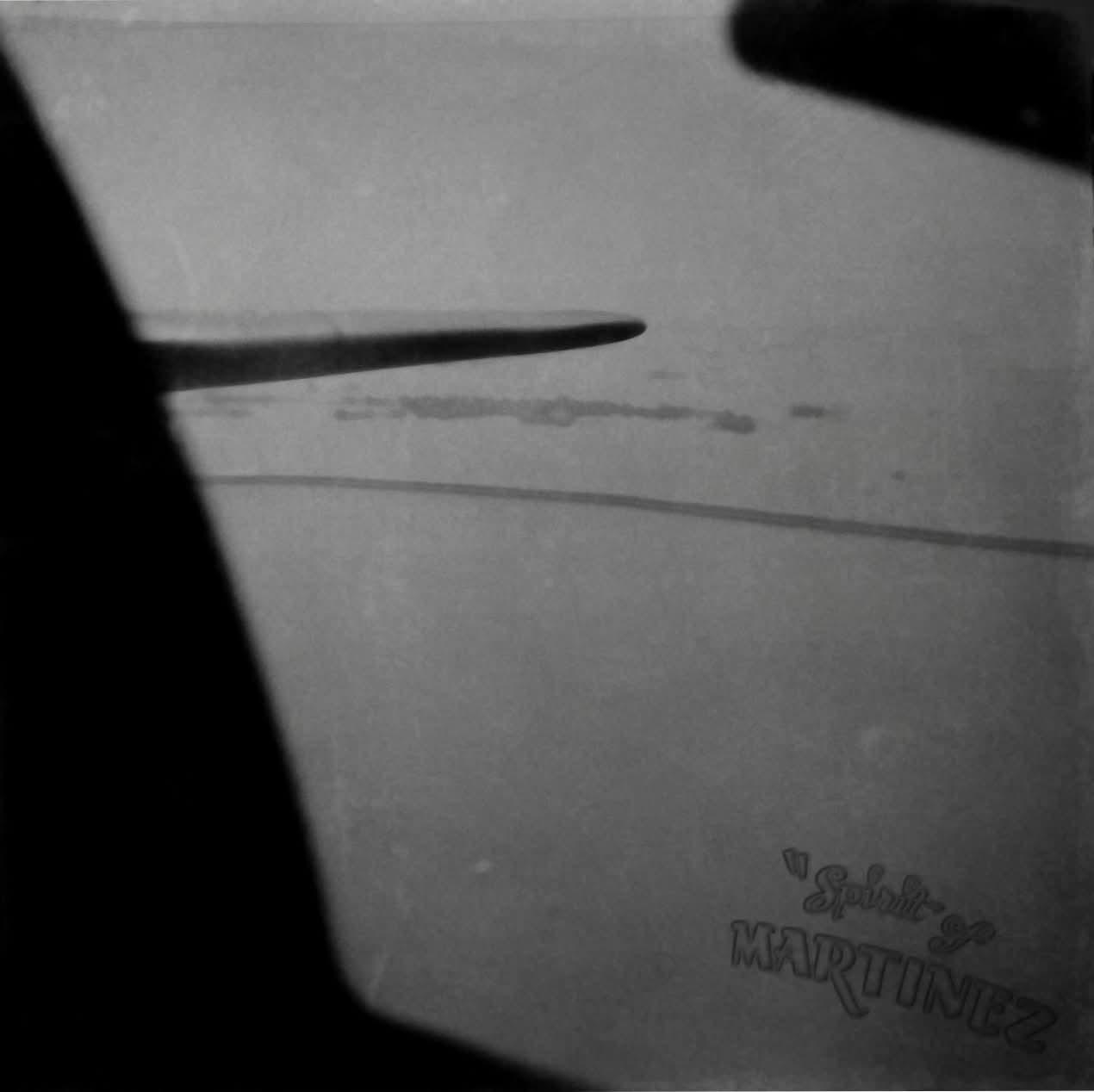
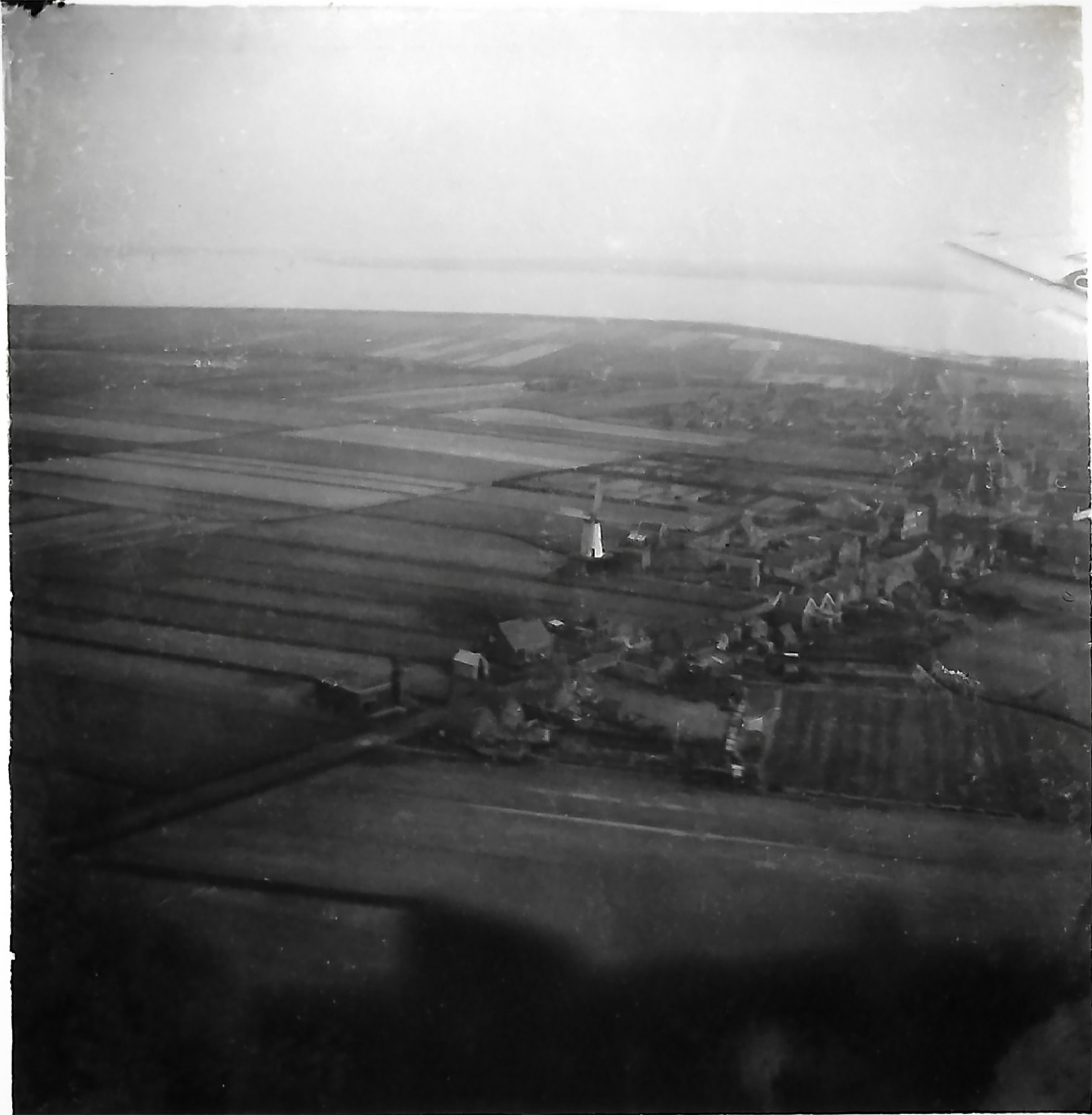

The operation was numbered sequentially by the group — Chowhound One, Two, and so on — and Frank’s crew flew the third mission of that sequence, then the fourth two days later, then the fifth the day after that. They had not flown the operation’s opening days. By the time their names went up on the board for it, the arrangement had already held for two days without incident. An agreement between enemies, tested and so far unbroken, before the third crew from the 95th Bomb Group’s own record ever got their turn to trust it.
12.5
An unnamed account, posted online years later alongside photographs of the drops, recalls a relative who was a child in Holland that spring, and who remembered — the family’s own words — that the white bread tasted like cake.
This detail cannot be verified to a name, a date, or a specific drop zone, and it should not be read as documented fact in the way the mission dates and tonnage above are documented. What can be said is that it matches, almost exactly, what named survivors of that winter did say about the food that fell out of the sky in May 1945. Bread made from brown beans, bread stretched with beet pulp, soup boiled from tulip bulbs — and then, after months of that, bread made from wheat, the way bread was supposed to be made. To a child who had not tasted it in the better part of a year, there is no particular reason to doubt that it tasted like cake. The reaction she is remembered as having had was, by every documented account of that winter, the ordinary one.
Frank Calicura flew three missions into that reception and never described, in any surviving letter, what it looked like from four hundred feet. The collection kept the view anyway: the mill on the approach, the doors open, the white sacks on the field.
The nine wallets in the footlocker, stamped for a war in the Pacific that never came, are still the artifact of the days just before it — nine men expecting one thing, and being handed, instead, three mornings over Utrecht that had nothing to do with what any of them had trained for.
Cite this
The Spirit of Martinez. Utrecht, Chapter 12. What a Family Kept.
https://www.spiritofmartinez.com/chapters/utrecht
A note on sources