
Chapter 7 · January 1945
Station 119
Horham, Suffolk — January 1945
A replacement crew inherits a reputation entire and instantly, having contributed nothing to it, and is expected to fly as though it had.
A synthetic reading of this chapter is in the bar at the top. It will keep playing while you move through the book. The text below is the transcript. The voice’s place on the page is marked as it reads.
7.1
The airfield Frank Calicura reported to in early January 1945 had been built for someone else.
Horham was planned for the Royal Air Force, then handed to the United States Army Air Forces in 1942 and given the designation Station 119. It sat four miles southeast of Eye, in East Suffolk, and it was large enough that it did not belong to a single village — the base sprawled across four parishes, Horham, Denham, Redlingfield, and Hoxne, none of which had been consulted in any meaningful way about acquiring it.
It was built to the standard Class A layout: three intersecting runways, the main one running about two thousand metres, the two secondary runways about fourteen hundred each. Two T-2 hangars went up on the south side, painted in black and dark earth camouflage — an earlier practice than the tar varnish finish used at fields built later in the war. The technical site sat beside them along the B1117 road to Eye. Headquarters, the administrative buildings, and the living sites were temporary Nissen hut construction, dispersed westward into the farmland of Denham parish so that a single raid could not take out the whole station at once.
A landscape historian has described the construction of the airfield as the single largest change to that landscape in two thousand years. It is not an exaggerated claim. By 1943 there were more than a hundred thousand American airmen in England, most of them in East Anglia, and more than a hundred RAF and USAAF bases packed into an area smaller than Connecticut. Horham alone held roughly seventy aircraft and thirty-five hundred personnel — more people on the base than in the villages around it.
The men lived in metal huts through English winters with pot-bellied stoves for heat. Frank's own Certificate of Service puts his arrival in the European theater on January 6, 1945 — a date this book previously gave, without a document behind it, as the first of the month. It is corrected here.
7.2
He was joining a unit whose defining history was already finished.
The 95th Bombardment Group had come to Horham on 15 June 1943 after short stays at Alconbury and Framlingham, and stayed for the rest of the war. It flew four squadrons of B-17s — the 334th, 335th, 336th, and 412th — and from September 1943 the base also served as headquarters for the 13th Combat Bombardment Wing of the 3rd Air Division, which meant Horham directed not only its own group but the 100th at Thorpe Abbotts and the 390th at Framlingham.
What set the 95th apart was three Distinguished Unit Citations, more than any other bomb group in the Eighth Air Force. The first came for Regensburg on 17 August 1943. The second for Münster on 10 October 1943. The third for Berlin on 4 March 1944, when the 95th became the first American group to bomb the German capital — flying through weather that turned back or diverted most of the other groups sent that day, and hitting the target anyway.
All three of those days were behind it before Frank Calicura ever saw the place. The men who earned them were, by January 1945, dead, imprisoned, rotated home, or reassigned elsewhere. A replacement crew arriving at Horham inherited a reputation entire and instantly, having contributed nothing to it, and was expected to fly as though it had.
Martinez learned the same inheritance in a paragraph headed Lieut. Calicura At British Base. Second Lieutenant Frank J. Calicura, 23, assigned to the 95th Bombardment Group, commanded by Colonel Jack E. Shuck of Casper, Wyo., taking an orientation course on flying procedure prior to combat. The paper then recites the group’s citations: the first American bombing attack on Berlin; Münster, October 1943; the England-Africa shuttle to a Messerschmitt plant at Regensburg, August 1943. It is the hometown version of the reputation this chapter has already named. The paper puts his father at 731 Mellus Street, with Joyce and Frank Jr. living with him. This book puts the parents at 515 and Frank at 731. After Angelina’s death the household may have moved; the paper may have mixed the two doors. Age twenty-three fits.
See the platePlate 28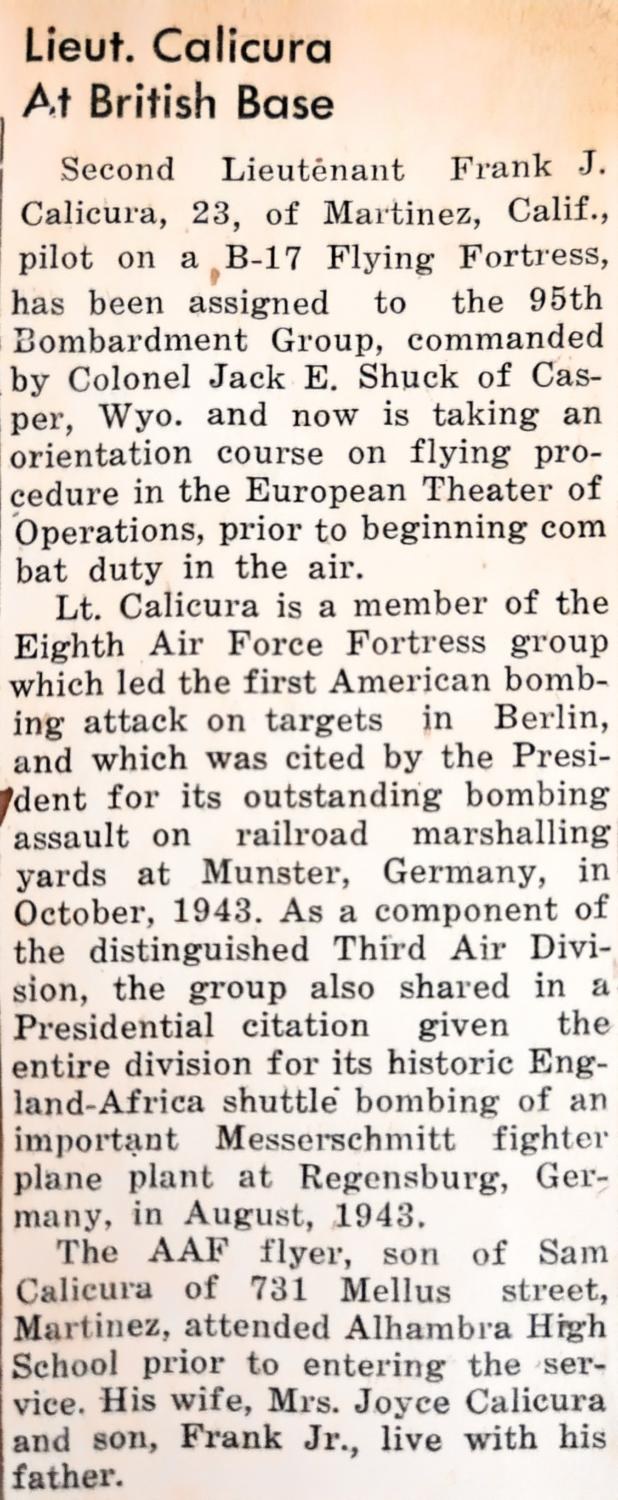

7.3
Command of the group changed hands five times in under two years.
Colonel Jack E. Shuck took it over in December 1944 — the same month Frank’s crew received the operations order that would send them to England. Shuck was therefore the group’s commanding officer for essentially the whole of Frank Calicura’s combat tour, from the first mission in February through the end of the group’s operational life in April.
A photograph in the family’s collection shows the two men shaking hands. It is dated 1945 and it is what it appears to be: a formal recognition moment, the kind a group commander performed regularly and a crew photographed once. The book records it as that and does not inflate it into a friendship the record gives no evidence for.
See the platePlate 27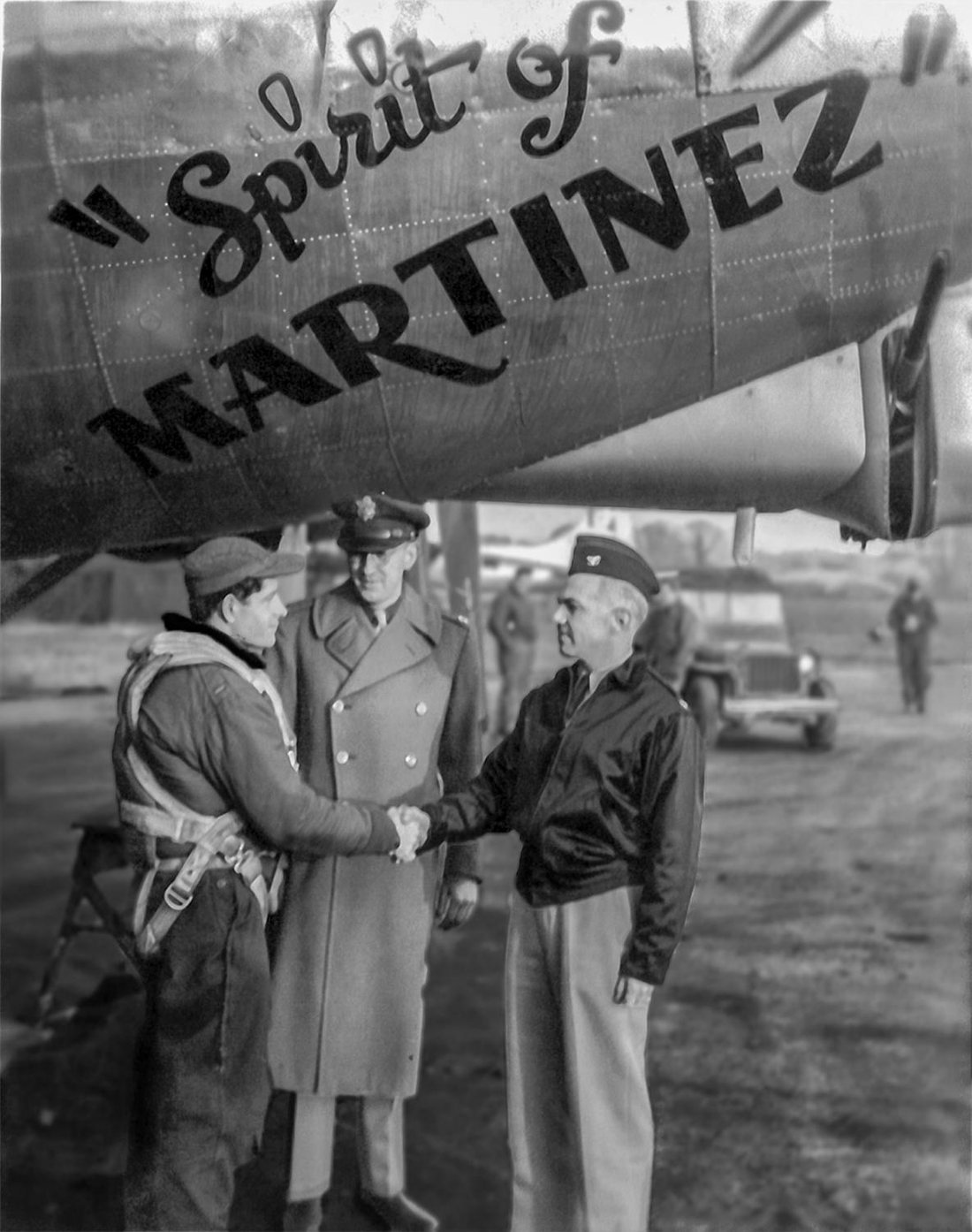

There would be one more commander. Lieutenant Colonel Robert H. Stuart took over the 95th on 28 April 1945 — eight days before the war in Europe ended, and four days before the group began dropping food instead of bombs. It is Stuart’s name on the memorandum in the family’s collection recommending Frank as an instructor and certifying, in the flat language of a headquarters document, exactly how many times he had gone out and how many hours he had spent doing it, written in the last weeks the 95th Bomb Group existed as a fighting unit.
7.4
The group’s emblem was a red feather on a shield.
In March 1944 the non-commissioned officers of the ground crews, who had no club of their own, opened one in a set of interconnected Nissen huts on one of the communal sites and named it after the emblem: the Red Feather Club. It had a beer hall, a bar, and a dry lounge. In 1944 a staff sergeant named Nathan Bindler painted murals on the walls of one of the rooms. They are still there.
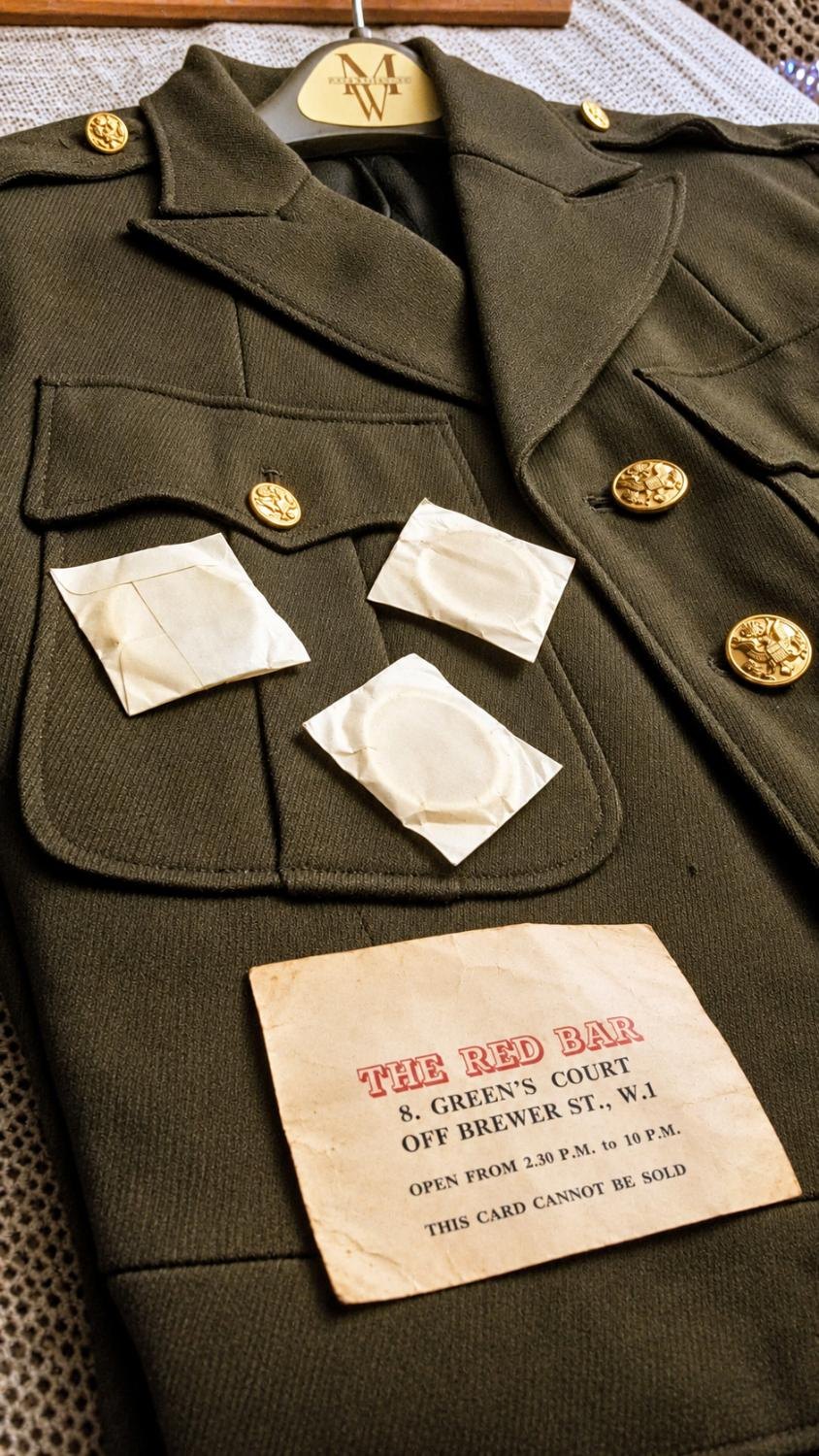
This is the part of a bomber station that the operational record does not touch at all. The mission reports document targets, tonnage, losses, and times. They document nothing about a beer hall, a mural, a cartoon pinned to a barracks wall, or a card from a Soho club carried back from a London pass and kept in a uniform pocket for the rest of a man’s life. The family’s collection preserves a “Barracks E” cartoon and a Red Bar membership card from Green’s Court, Soho — two scraps of a daily life that ran continuously alongside the missions and was almost entirely undocumented by anyone whose job it was to document things. The coat still had the rest of that pocket in it: three paper prophylactics, laid on the flap as they came out, with the same card underneath.
See the platePlate 54See the platePlate 55See the platePlate 53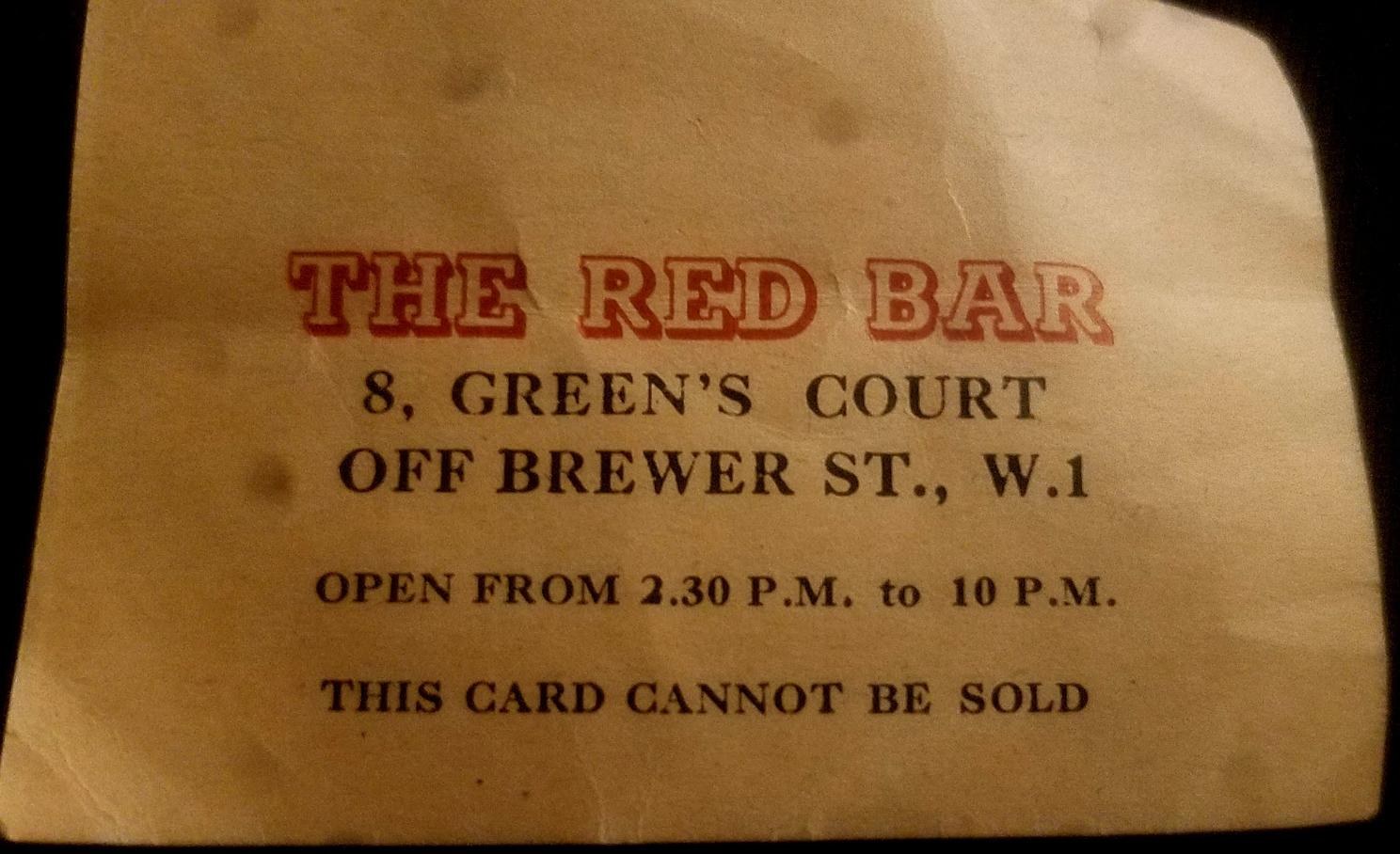
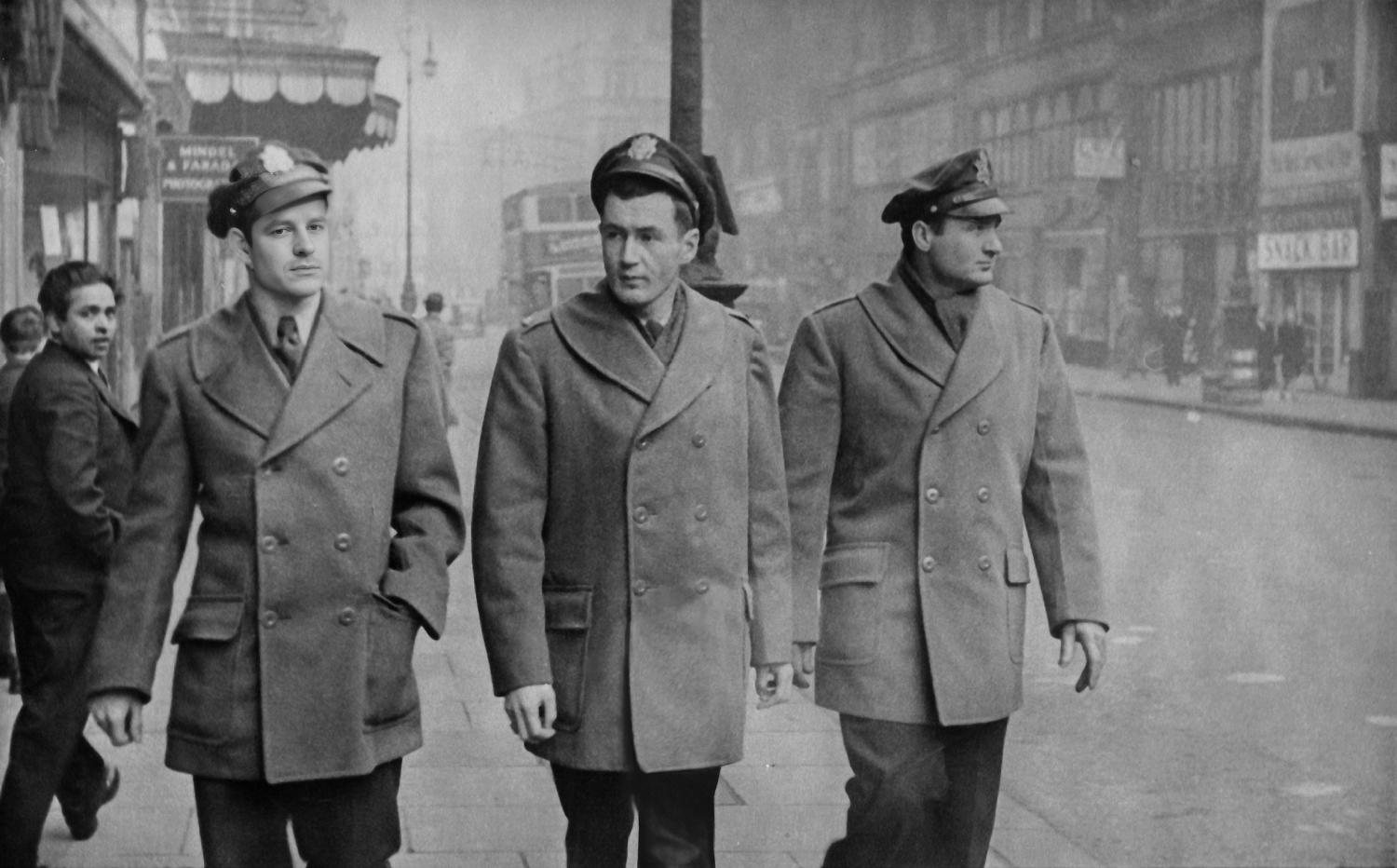


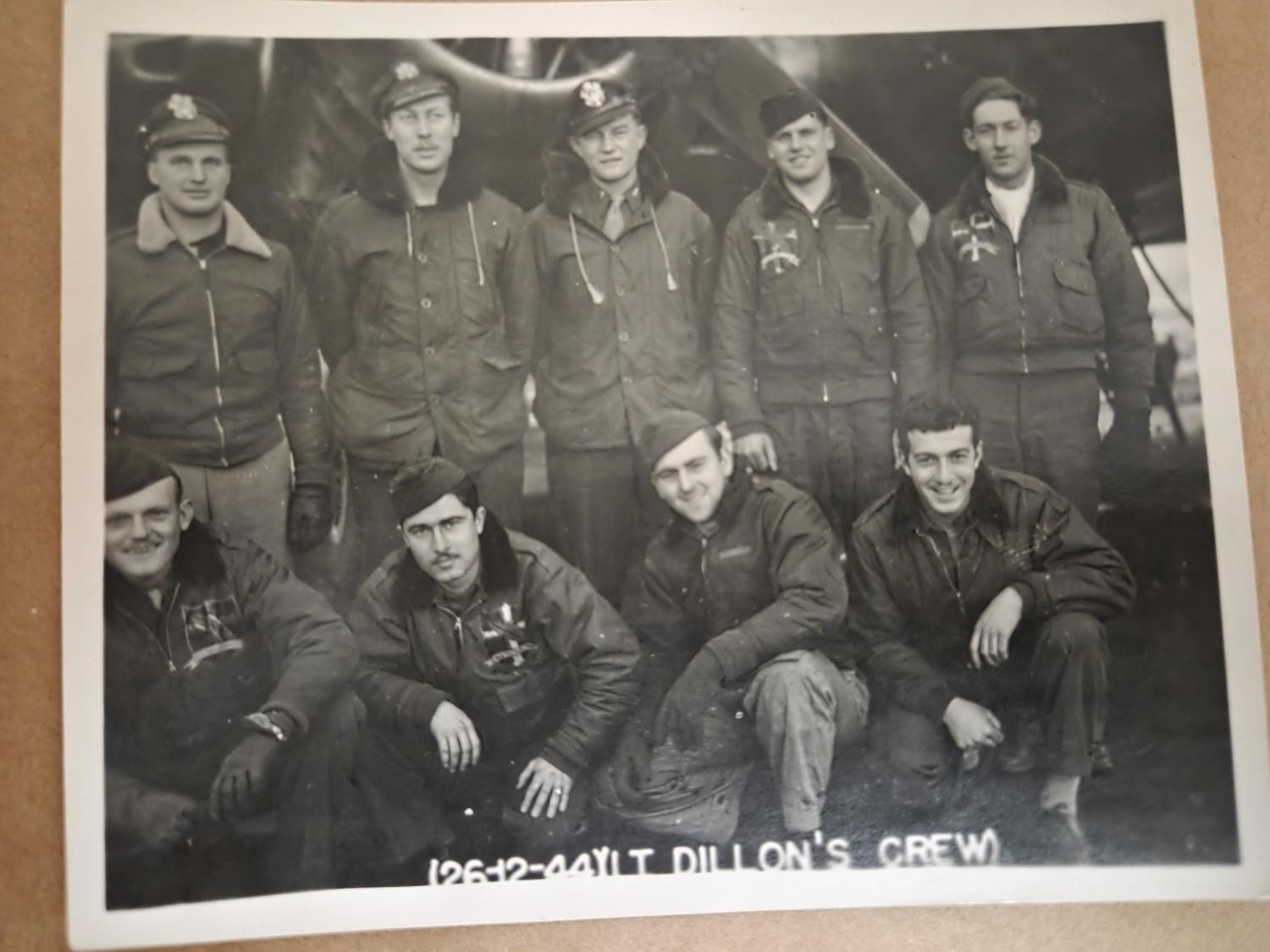
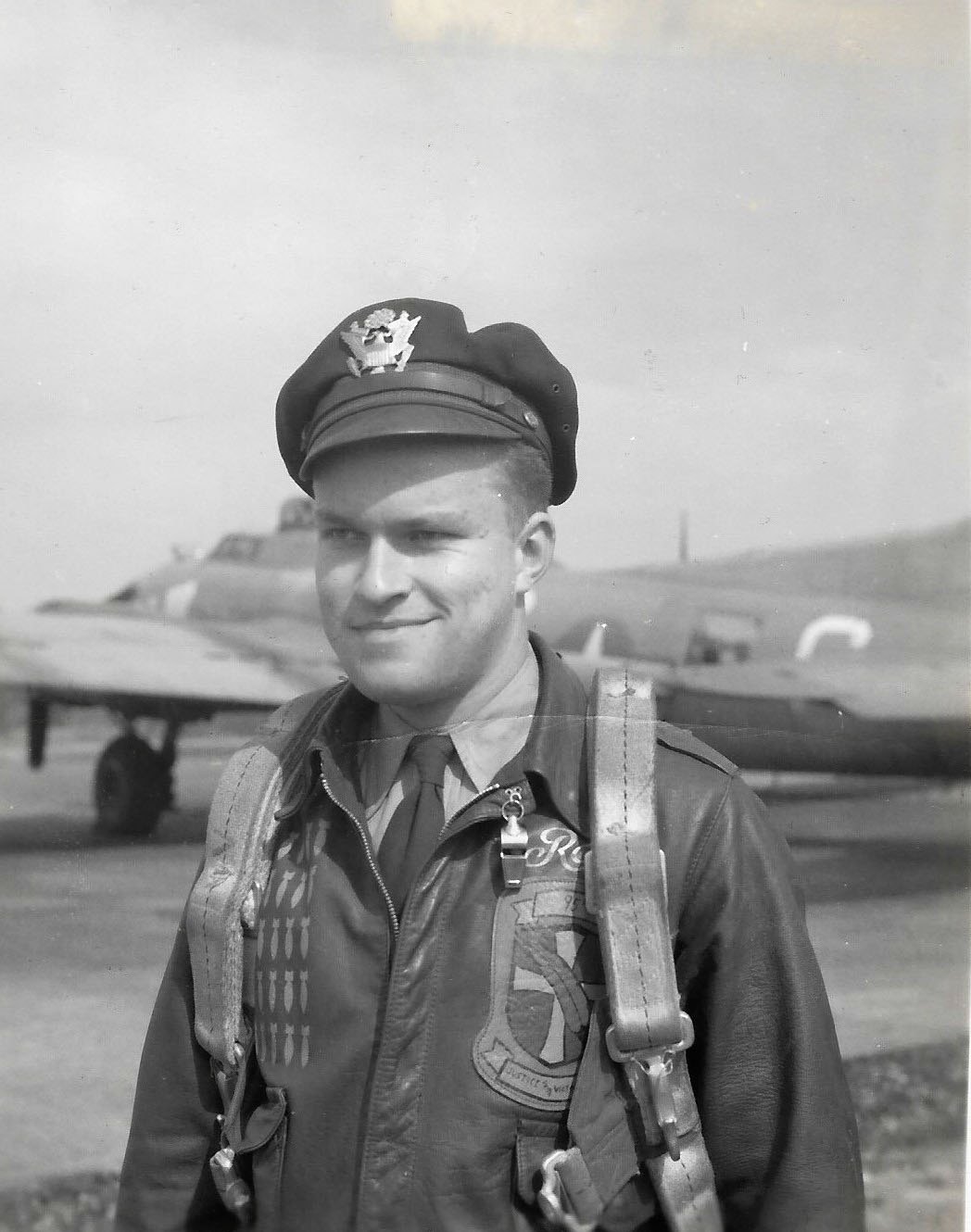
The collection also holds photographs of other crews from the 95th — Lieutenant Dillon’s, Shaw’s, Olson’s. They survive for no better reason than proximity: those men were quartered near enough to Frank’s crew, or flew near enough to them, that the prints ended up in the same collection. That is how the social world of a bomb group is reconstructed now, when it is reconstructed at all — from who happened to be standing next to whom. The prints date themselves. Shaw’s is 27 February 1944, a year before this crew reached Horham. Dillon’s is 26 December 1944, eleven days before Frank’s Certificate of Service places him in England. The family identifies both as 335th. Olson’s has not been found in this pass.
See the platePlate 19See the platePlate 20See the platePlate 21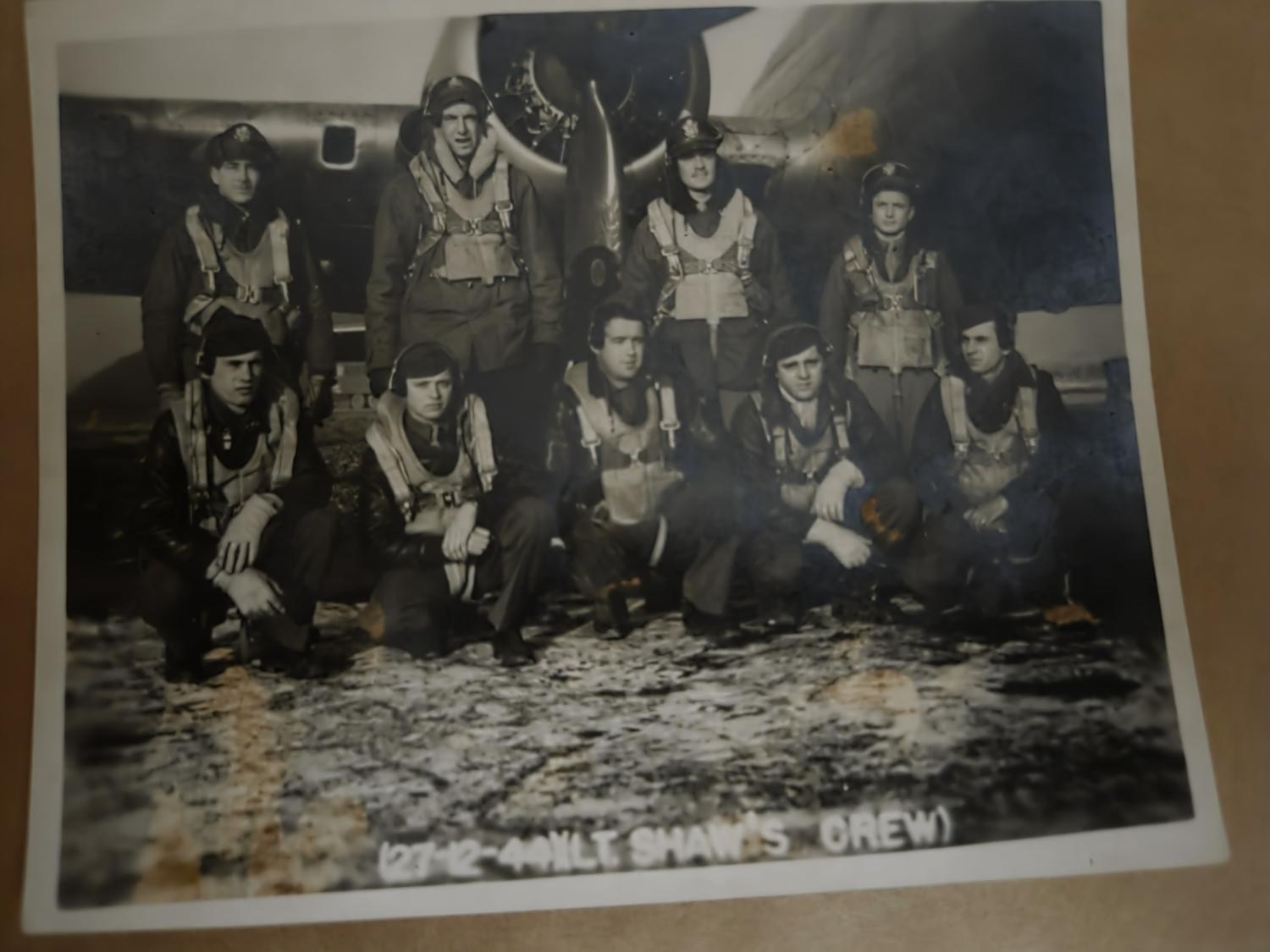


By the middle of January 1945, Frank Calicura’s crew was settled on a station whose great days were behind it, under a commander who had arrived the same month they did, in a metal hut in a Suffolk field, waiting for their names to appear on a board.
Cite this
The Spirit of Martinez. Station 119, Chapter 7. What a Family Kept.
https://www.spiritofmartinez.com/chapters/station-119
A note on sources